
Mechanical Cleaning Force
Pressure washing uses higher water pressure to loosen and remove buildup from compatible hard surfaces.
Pressure washing and soft washing are not interchangeable. The correct method depends on the surface, the type of buildup, and the condition of the material being cleaned.
Pressure washing uses mechanical force to remove dirt and buildup from durable surfaces.
Soft washing relies more heavily on cleaning solutions, dwell time and controlled low-pressure application.
Both methods can be effective when used on the correct surface. Problems occur when the cleaning method does not match the material being cleaned.
Pressure washing uses higher water pressure to loosen and remove buildup from compatible hard surfaces.
Soft washing relies more on professional cleaning solutions and controlled application than aggressive water pressure.
Read the Comparison Guide →The best cleaning process depends on the material, age, condition and type of exterior buildup present.
Durable hardscape surfaces can often tolerate cleaning methods that would be inappropriate for siding, roofing or other more sensitive materials.
Compatible concrete can often be cleaned efficiently with professional surface-cleaning equipment and controlled pressure.
Durable pedestrian concrete is a common application for professional pressure cleaning.
Patio surfaces can accumulate dirt, organic growth and weather-related buildup.
Residential and commercial curb surfaces may require professional hard-surface cleaning.
Paver cleaning requires additional attention to material, joint sand, previous treatments and sealing requirements.
Walkways, entries, pool decks and other durable surfaces may require higher-production cleaning methods.
Siding and roofing should not be cleaned simply by increasing water pressure until the buildup disappears.
Soft washing uses cleaning chemistry and controlled application so organic buildup can be treated without relying on aggressive surface pressure.
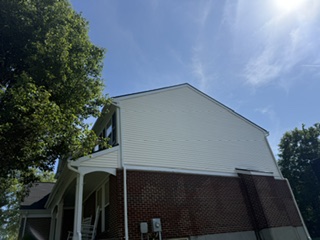
The exact process depends on material and condition, but these general categories show why one method should not be used everywhere.
Vinyl, compatible siding materials and many exterior wall surfaces are generally suited to controlled soft-washing methods.
Roof cleaning uses controlled low-pressure treatment rather than hard-surface pressure washing.
Compatible concrete surfaces can generally tolerate higher mechanical cleaning pressure.
Wood and composite decking require methods selected according to the specific material and condition.
Wood, vinyl and composite fencing require different approaches depending on material and existing coatings.
Paver cleaning must account for material, joint sand, drainage, existing sealers and intended post-cleaning treatment.
Exterior cleaning equipment can produce significant pressure. Using that pressure incorrectly can affect both the appearance and condition of surfaces.
Excessive pressure can damage exterior materials or force water behind siding and trim.
Poor technique or excessive pressure can leave visible wand marks or surface damage on some concrete.
Aggressive pressure can raise grain, gouge wood or create inconsistent surface appearance.
Roofing materials should not be treated like durable concrete surfaces.
Improper direction and pressure can push water into openings around siding, doors, windows and other exterior components.
Cleaning only with mechanical force can create stripes or inconsistent appearance if the process is not properly controlled.
Professional exterior cleaning begins by identifying what is being cleaned and what type of buildup is present.
The equipment and cleaning method should follow that evaluation—not the other way around.
Pressure washing relies more heavily on mechanical water pressure, while soft washing relies more heavily on cleaning solutions and controlled low-pressure application.
Soft-washing methods are commonly used on compatible siding because the cleaning process does not depend on aggressive surface pressure.
Concrete cleaning often includes professional surface-cleaning equipment and controlled pressure, though cleaning solutions may also be part of the process depending on condition.
Our roof-cleaning approach uses controlled low-pressure treatment rather than treating roofing like a hardscape surface.
Professional soft washing uses cleaning solutions selected for the surface and type of organic buildup being treated.
The surface material, condition, staining, buildup, access and surrounding property should be evaluated before selecting the cleaning process.
Learn why some Ohio homes develop organic buildup faster than others.
Read the House Washing Guide →Learn when driveways, sidewalks and patios may be ready for professional cleaning.
Read the Concrete Guide →Understand the primary factors that affect professional exterior-cleaning pricing.
Read the Cost Guide →Select your exterior services and property details through the Dutch Pride Instant Quote calculator. We evaluate the cleaning method based on the actual surface and project requirements.