
Surfaces Included
Clearly identify sidewalks, curbs, pool decks, clubhouse areas, postal pads, entry features, dumpster pads or other surfaces included.
Large community cleaning projects require more than choosing a price per square foot. Boards and property managers should consider scope, measurements, resident communication, scheduling, surface conditions, access and quality control before work begins.
Large community projects can involve thousands of square feet of sidewalks, curbs, pool decks, common areas, entry features and other shared surfaces.
A clear scope reduces confusion between the board, property manager and contractor by defining what is included, how quantities are measured and what conditions may require additional review.
The more detailed the scope is before approval, the easier it is to manage scheduling, pricing, resident expectations and project completion.
A useful bid package gives contractors enough information to price the same scope.
Clearly identify sidewalks, curbs, pool decks, clubhouse areas, postal pads, entry features, dumpster pads or other surfaces included.
Square footage, linear footage and site maps should be reviewed so every contractor is pricing the same quantities.
Heavy organic buildup, oil, rust, drainage staining or long-neglected areas may require different treatment than routine cleaning.
Parking, gates, traffic, resident vehicles, locked amenities and water access can affect how work is scheduled and completed.
Large properties may need to be divided into zones so residents retain access while work progresses.
Define how completed areas will be reviewed, documented and accepted before the project is closed.
Communities often have several different surface types that require different cleaning methods and pricing structures.
Long sidewalk networks can represent one of the largest measurable portions of a community cleaning project.
Standard and mountable curbs may be measured differently depending on surface width and project requirements.
Pool areas require careful scheduling around seasonal opening, resident access and surrounding amenities.
Exterior walls, entry concrete, walkways and other clubhouse areas can be incorporated into a coordinated maintenance project.
Small high-traffic pads around community mail stations may be easy to overlook when the original scope is prepared.
Commercial-style areas can require different treatment because of grease, waste residue and heavier contamination.
Measurement discrepancies can create major budget problems on large properties because even small errors multiply across thousands of square feet or linear feet.
Site maps are useful starting points, but the final scope should be reconciled against the actual surfaces expected to be cleaned.

A low bid is difficult to evaluate if contractors are using different measurements, exclusions or cleaning methods.
Compare the exact surfaces and quantities included in each proposal.
Confirm the contractor carries appropriate insurance for the work being performed.
Large projects require sufficient equipment, water management and production capacity to complete the work efficiently.
Understand how long the project is expected to take and how resident access will be managed.
Identify who will communicate with the board, property manager and residents during the project.
The proposal should explain how field conditions or scope changes will be handled before additional work is performed.
Resident communication can reduce delays caused by parked vehicles, locked gates, personal property and unexpected access restrictions.
Give residents reasonable notice of the expected cleaning dates for their section of the property.
Explain whether vehicles, furniture, planters, decorations or other personal items need to be moved.
Breaking the property into defined zones can make a multi-day project easier for residents to understand.
Large properties sometimes reveal conditions that were not obvious during the original bid.
Additional square footage, omitted pads, unusual staining or other scope differences should be documented clearly so the board understands the reason for any change in project value.
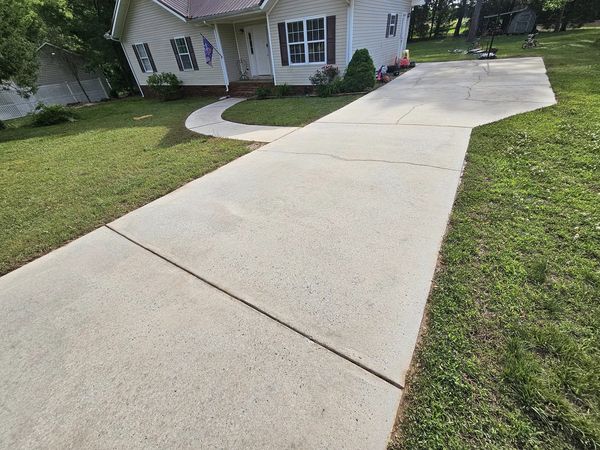
Provide contractors with the same written scope, maps, measurements and surface list so proposals can be compared on an equivalent basis.
Square footage is commonly useful for large hardscape surfaces, but access, condition, staining, production requirements and other project factors can also affect pricing.
Duration depends on total scope, equipment, water availability, access, weather and daily production capacity. Large projects are often completed in scheduled zones.
Advance communication is generally useful when vehicles, personal property or resident access could interfere with scheduled work.
The discrepancy should be documented and reconciled before additional scope is completed, especially when the change affects the approved budget.
Yes. Dutch Pride Power Wash provides commercial and community exterior-cleaning services throughout Greater Cincinnati, including concrete and other shared exterior surfaces.
Review the major factors that affect residential and commercial exterior-cleaning estimates.
Send us the property information, scope, measurements, maps and project requirements. We can review the work and prepare commercial exterior-cleaning pricing.